
Gel Injection

What Are Gel Injections?
- For your joints to move comfortably, they need enough synovial fluid, which acts as a natural lubricant and cushion. In conditions like osteoarthritis, this fluid becomes less effective because it loses a key substance called hyaluronan. As a result, the joint may lose cartilage, and bones can begin to rub together, causing pain, stiffness, and inflammation.
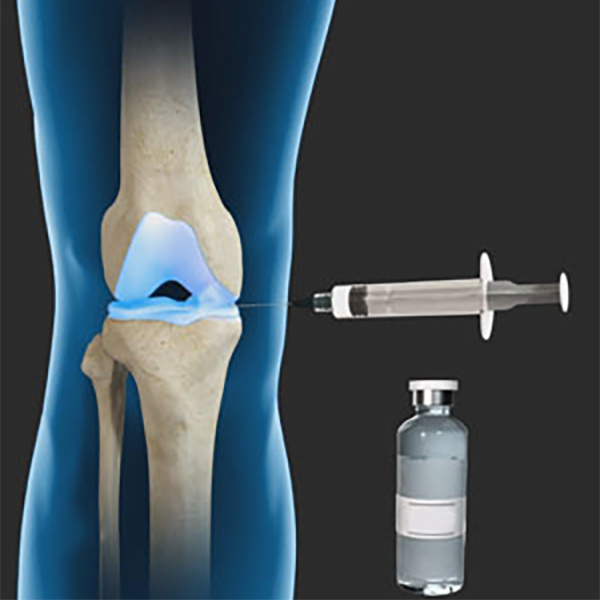
- Hyaluronate injections, also known as hyaluronic acid injections or viscosupplementation, are used to help restore this lost lubrication. The treatment involves injecting a gel-like substance into the affected joint to improve shock absorption, reduce pain, and support smoother movement. In many cases, this option can help delay or avoid the need for joint surgery.
- These injections are typically recommended after other non-surgical treatments—like medications, physical therapy, and cortisone injections—have not provided enough relief.
Description of Procedure
- During the procedure, your provider may first remove any excess fluid from the joint. Then, the hyaluronate is injected directly into the joint space. Some patients experience mild discomfort, swelling, or warmth at the injection site immediately afterward. These symptoms usually improve with ice and rest. For the best results, it’s important to avoid heavy activity or weight-bearing on the joint for about 48 hours after the injection.
- Depending on your condition, your provider may recommend a single injection or a series of up to three injections spaced over several weeks. Relief from symptoms typically builds gradually and can last for several months.