
Not every joint injury responds to rest, and not every patient wants to jump straight to surgery. Somewhere between conservative treatment and the operating room sits a growing category of regenerative options, and BMAC has become one of the most talked about. But what is it actually made of, and does the science behind it hold up? Here's a closer look at how this treatment works.
Breaking Down What BMAC Actually Is
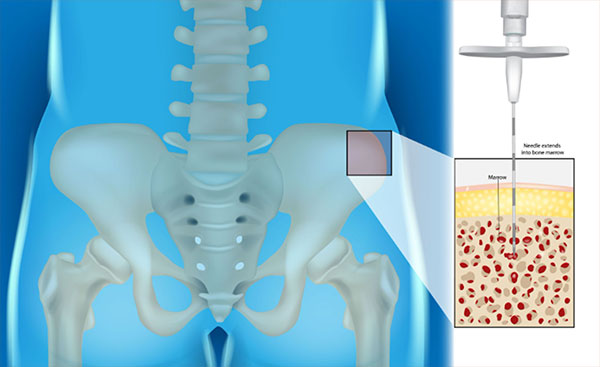
BMAC stands for bone marrow aspirate concentrate, a treatment derived from a patient's own bone marrow rather than blood, which distinguishes it from PRP or micronized fat. The procedure involves extracting a small amount of bone marrow, typically from the pelvis, and processing it through centrifugation to concentrate the mesenchymal stem cells, or mesenchymal signalling cells (MSCs) and the growth factors they contain. Bone marrow is rich in mesenchymal stem cells, along with growth factors and signaling proteins that play a role in tissue repair, which is why it has drawn interest as a tool to support healing in joints where natural regenerative capacity has stalled, or is limited.
How BMAC Differs From PRP
Patients considering regenerative treatment options often want to know how BMAC compares to PRP, since both use a patient's own biological material to support healing. PRP concentrates platelets from blood, while BMAC draws from bone marrow and includes a broader range of cellular components, including the specialized mesenchymal stem cells. In practice, this means BMAC is sometimes considered for more complex or advanced tissue damage, such as significant cartilage defects or early-stage avascular necrosis.
The Extraction and Injection Process
BMAC collection typically involves a minimally invasive aspiration from the iliac crest, the top ridge of the pelvic bone, performed under local anesthesia or sedation depending on the clinical situation. The collected marrow is processed in a centrifuge to separate and concentrate the regenerative components before being injected into the target area. At our institute, this is often done under imaging guidance to ensure precise placement within the joint or damaged tissue. The entire process, from collection to injection, is completed in a single outpatient visit.
Conditions Where BMAC Is Often Considered
BMAC has drawn particular interest for cartilage-related conditions within the hip, since cartilage has a limited natural blood supply and correspondingly limited capacity to heal on its own. It's sometimes used for hip cartilage defects, either as a standalone treatment or in combination with cartilage restoration procedures performed during hip arthroscopy. Early-stage avascular necrosis, a condition involving disrupted blood supply to bone tissue, is another area where BMAC's regenerative properties have generated interest, since intervening before significant bone collapse occurs may help preserve the joint. Labral tears with limited healing potential due to their location within the hip may also be considered candidates, depending on the specific tear pattern and a patient's overall clinical picture.
What the Evidence Currently Shows
Research on BMAC continues to evolve, and while early studies and clinical experience suggest promising results for select conditions, it's important to approach the treatment with realistic expectations rather than viewing it as a guaranteed fix. The strength of evidence varies by condition, with more established support for certain applications than others, which is why BMAC tends to be recommended selectively rather than broadly, based on a thorough evaluation of the specific joint pathology involved rather than a one-size-fits-all approach.
Why an Accurate Diagnosis Comes First
Because BMAC is a more involved and resource-intensive procedure than a standard injection, it typically isn't the first treatment considered. A comprehensive evaluation, including advanced imaging to fully understand the extent of joint or cartilage damage, generally comes before any regenerative treatment recommendation. This diagnostic step matters considerably, since BMAC tends to work best when matched precisely to the condition it's suited for, rather than used as a default option for general joint pain.
Recovery and What to Expect Afterward
Most patients experience some soreness at both the injection site and the bone marrow aspiration site for a few days following the procedure. Similar to PRP and micronized fat, results from BMAC build gradually over weeks to months as the regenerative process unfolds, rather than providing immediate relief. Physical therapy and activity modification during this window often play a meaningful supporting role in how well the treatment ultimately performs.
Frequently Asked Questions
Is BMAC the same as stem cell therapy?
BMAC contains mesenchymal stem cells along with other regenerative components from bone marrow, so it's often grouped under the broader category of stem cell therapy, though it specifically refers to bone marrow-derived concentrate rather than stem cells from other sources.
Is BMAC painful to have done?
The bone marrow aspiration and injection are typically performed with just local anesthesia to minimize discomfort, though some soreness at both sites is common for a few days afterward.
How long does it take to see results from BMAC treatment?
Similar to other regenerative treatments, results generally build gradually over several weeks to a few months as the body's healing response progresses, rather than providing immediate relief.
Is BMAC better than PRP for joint injuries?
Neither treatment is universally better, since they contain different regenerative components and tend to suit different conditions. Discussion with your specialist can help decide which treatment option is best for you.
Who is a good candidate for BMAC treatment?
Candidates are typically determined through a comprehensive evaluation, since BMAC tends to be considered for specific conditions like cartilage defects, early arthritis or early avascular necrosis rather than nonspecific joint pain.
Regenerative treatments like BMAC hold real promise, but they work best when matched precisely to the right condition through an accurate diagnosis. If you're exploring options for hip or joint pain, scheduling a comprehensive evaluation is the right first step toward understanding whether BMAC fits your situation.
Reference Links:
AUTHOR: Etan P. Sugarman, M.D., FAAOS - Orthopedic Joint Preservation & Sports Medicine Surgeon
Dr. Etan P. Sugarman is a board-certified orthopedic surgeon specializing in joint preservation, hip arthroscopy, sports medicine, and hip replacement at American Hip Institute & Orthopedic Specialists. He serves as Director of Joint Preservation and focuses on advanced, minimally invasive solutions to restore function and help patients return to active lifestyles.
Credentials & Recognition
Dr. Sugarman graduated with honors from New York University and completed his orthopedic surgery residency, where he graduated at the top of his class and was inducted into the prestigious American Orthopaedic Association (AOA).
He completed fellowship training in orthopaedic sports medicine at the Kerlan-Jobe Orthopaedic Clinic. He also completed advanced training in hip arthroscopy, preservation, and reconstruction at the American Hip Institute Research Foundation under the mentorship of Dr. Benjamin Domb.
Dr. Sugarman served as clinical and educational faculty at Lenox Hill Hospital in New York City for nearly a decade. He is a Fellow of the American Academy of Orthopaedic Surgeons (FAAOS) and has received multiple awards recognizing his contributions to orthopedic research and education.
Clinical Expertise
Dr. Sugarman specializes in the full spectrum of joint preservation and sports medicine, including hip arthroscopy for femoroacetabular impingement and labral tears, minimally invasive joint preservation procedures, and hip replacement. He also treats complex shoulder and knee conditions using advanced arthroscopic and reconstructive techniques.
He has developed innovative surgical techniques in hip and shoulder surgery and is actively involved in teaching advanced joint preservation procedures to orthopedic surgeons worldwide.
Dr. Sugarman has treated professional and elite athletes from organizations including the NFL, MLB, NHL, NBA/WNBA, MLS, and Division I collegiate programs, as well as Olympic athletes. He has authored over 100 publications and presentations and is dedicated to advancing the field of joint preservation and sports medicine.
Medical Disclaimer: This information is for educational purposes only and does not constitute medical advice. For diagnosis and treatment recommendations, please consult with Dr. Sugarman or another qualified orthopedic specialist at American Hip Institute & Orthopedic Specialists.
Content authored by Dr. Etan P. Sugarman and verified against official sources.