

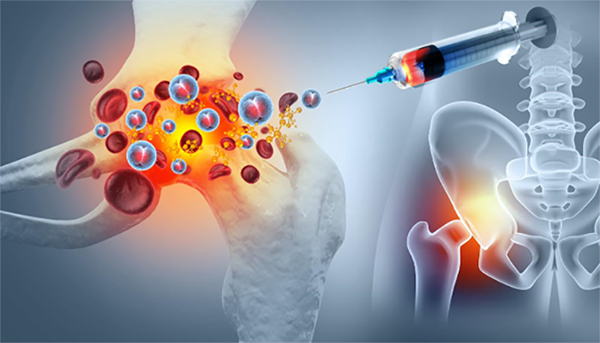
Not all hip injections are the same, and choosing the wrong one for the wrong condition is one of the most common reasons patients experience disappointing results. A steroid injection that works beautifully for one patient may do nothing for the next, not because the injection failed, but because the underlying cause of pain was never the right target for that therapy. Let’s look at what the research says about matching the injection to the diagnosis.
Why the Diagnosis Must Come Before the Treatment
Hip pain is anatomically complex. The hip joint sits deep within the body, its symptom patterns overlap with the lumbar spine and surrounding soft tissue, and two patients with identical complaints can be experiencing pathology from entirely different structures. A steroid injection delivered to a broadly painful hip without a confirmed anatomical target is not a treatment plan, it is a guess.
The diagnostic steroid injection serves a dual role that is frequently underappreciated: it delivers anti-inflammatory medication to a specific target and simultaneously confirms whether that target is the primary pain generator based on the patient's response. This diagnostic step is the foundation of every well-constructed hip injection decision, because the right injection for a labral tear, a bursa, and a cartilage lesion are not the same.
Steroid: When It Works and When It Doesn't
Corticosteroid (steroid) injections are the most commonly administered hip injection and, for the right condition, among the most effective. These injections of steroid are frequently called ‘cortisone’ injections by lay people but are actually a different, more evolved, type of steroid. A systematic review of intra-articular hip injections published by the American Hip Institute (AHI) Research Foundation confirmed that corticosteroids provide better short-term pain relief than hyaluronic acid or PRP in hip osteoarthritis, with higher doses producing longer-lasting benefit and no significant increase in infection risk prior to subsequent hip arthroplasty.1
However, steroid's mechanism is purely anti-inflammatory, it does not repair damaged tissue, restore cartilage integrity, or address the structural pathology driving pain in conditions such as labral tears, cartilage defects, or soft tissue degeneration. For these conditions, an injection that reduces inflammation temporarily may provide short-term comfort without altering the underlying biology, and repeated corticosteroid use can actually weaken soft tissue over time.
PRP: Targeting the Biology of Repair
Platelet-Rich Plasma (PRP) operates through an entirely different biological mechanism. By concentrating growth factors from the patient's own blood and delivering them directly to damaged tissue, PRP signals the body to initiate a healing response at the cellular level. Growth factors in PRP can stimulate tissue regeneration and restore strength and function in injured structures, and the therapy has been used extensively in professional athletes seeking an accelerated return to play.
AHI research also supports the use of PRP for recalcitrant greater trochanteric pain syndrome (pain over the lateral aspect of the hip), and other hip conditions driven by gluteal tendon degeneration, where PRP injections following failed physical therapy demonstrated effective and safe outcomes, with a lower complication rate than surgical intervention.2
PRP is best suited to soft tissue pathology, labral irritation, tendinopathy, early cartilage damage, and bursitis that has not responded to steroid, where the goal is biological repair rather than temporary symptom suppression.
Cell Therapy: The Option for More Advanced Structural Damage
For patients with confirmed cartilage loss, avascular necrosis, or more advanced joint degeneration, cell therapy, using regenerative cells harvested from the patient's own bone marrow or fat tissue, offers the most biologically powerful non-surgical option available. Unlike PRP, which amplifies the existing healing environment, cell therapy introduces undifferentiated cells capable of differentiating into cartilage, bone, and connective tissue, providing the potential for true tissue regeneration in structures that have already sustained significant structural damage.
When ultrasound or fluoroscopy-guided injections of PRP or bone marrow concentrate are administered into the hip joint over time, there is evidence of reduced pain and improved function, suggesting that cartilage and other injured tissue have regenerated.3 Cell therapy is particularly well-suited to patients who want to avoid or delay surgical intervention and whose pathology has progressed beyond what PRP alone can reliably address.
Viscosupplementation: Restoring the Joint Environment
Hyaluronic acid injections, viscosupplementation, occupy a distinct clinical role by restoring the lubrication and shock-absorbing properties of synovial fluid in joints where fluid quality has deteriorated. This approach does not repair tissue or reduce inflammation in the way steroid or PRP does; rather, it modifies the mechanical environment of the joint, reducing friction and contact stress on remaining cartilage. It is most appropriate for patients with early to moderate osteoarthritis who are not yet candidates for more advanced regenerative therapy or surgical intervention.
The Right Injection Is the One Matched to Your Diagnosis
The most important conclusion from both the clinical research and the non-surgical treatment philosophy at the American Hip Institute is straightforward: injection therapy works best when the treatment is precisely matched to a confirmed anatomical source of pain. A comprehensive evaluation, including clinical examination, advanced imaging, and where appropriate a diagnostic injection, is the foundation of an injection decision that produces durable results rather than temporary relief.
Frequently Asked Questions: Hip Injections
- How long does a steroid injection last for hip pain?
Relief from a corticosteroid injection typically begins within a few days and can last anywhere from several weeks to several months, depending on the underlying condition, the dose administered, and the individual patient's response. Steroid addresses inflammation but does not repair damaged tissue. - How many PRP injections are needed for hip pain?
Most PRP protocols for hip conditions involve a series of one to three injections administered over several weeks, with meaningful improvement typically developing over four to twelve weeks as the tissue repair process unfolds. The number of injections is individualized based on the severity of the pathology. - Is steroid bad for the hip joint long-term?
Repeated corticosteroid injections into the same joint over a short period can weaken surrounding soft tissue and potentially accelerate cartilage deterioration. Most guidelines recommend limiting intra-articular steroid to no more than three to four injections per year in the same joint for this reason. - Can PRP or cell therapy eliminate the need for hip surgery?
For some patients with soft tissue pathology or early cartilage damage, regenerative therapies can provide sufficient pain relief and functional improvement to avoid or significantly delay surgical intervention. For patients with advanced structural damage, they may reduce symptoms but are unlikely to replace surgery entirely. - What is the difference between PRP and cell therapy for the hip?
PRP concentrates growth factors from the patient's own blood to stimulate the existing healing environment in damaged tissue. Cell therapy introduces undifferentiated regenerative cells, harvested from bone marrow or fat tissue, that can differentiate into cartilage, bone, or connective tissue, making it a more powerful option for patients with more advanced structural joint damage.
Reference Links:
- Symposium: evidence for the use of intra-articular cortisone or hyaluronic acid injection in the hip - PubMed
- Platelet-Rich Plasma Versus Surgery for the Management of Recalcitrant Greater Trochanteric Pain Syndrome: A Systematic Review
- How Regenerative Medicine Can Help Your Hip Pain
AUTHOR: Mark F. Schinsky, MD, FAAOS, CIME – Orthopedic Hip & Knee Replacement Surgeon
Mark F. Schinsky, M.D., FAAOS, CIME is a fellowship-trained, board-certified orthopedic surgeon specializing in adult reconstructive orthopaedic surgery, hip replacement, knee replacement, and regenerative medicine. He serves as Director of Complex Hip & Knee Replacement and is recognized for advanced expertise in minimally invasive, complex primary, and revision total joint replacement procedures.
Credentials & Recognition
Dr. Schinsky earned his medical degree from the Columbia University College of Physicians & Surgeons and completed elite orthopaedic training at Barnes-Jewish Hospital affiliated with Washington University in St. Louis, as well as RUSH University.
With extensive clinical experience and thousands of successful hip and knee replacements performed, Dr. Schinsky is widely respected for his precision, surgical judgment, and commitment to improving patient mobility and quality of life. He has also contributed to the design of innovative orthopaedic implants and regularly travels nationally and internationally to educate surgeons on the latest joint replacement technologies and surgical techniques.
Clinical Expertise
Dr. Schinsky focuses on minimally invasive joint replacement, complex primary and revision hip and knee arthroplasty, and advanced reconstructive procedures tailored to each patient’s anatomy and functional goals. He treats patients from the Chicagoland region and across the country who seek specialized expertise in complex joint reconstruction. His patient-centered approach emphasizes individualized care, modern surgical technology, and comprehensive recovery planning to restore long-term function and independence.
Medical Disclaimer
This information is provided for educational purposes only and does not constitute medical advice. For diagnosis and treatment recommendations, please consult with Dr. Schinsky or another qualified orthopedic specialist at the American Hip Institute.